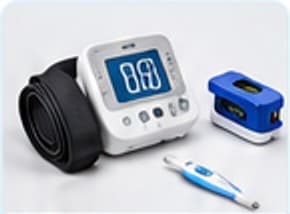
How to Choose a Home Blood Pressure Monitor
Upper-arm vs. wrist monitors, cuff sizing and getting readings you can trust.
Upper-arm monitors are generally more reliable
Upper-arm digital monitors are generally considered more accurate for home use than wrist monitors, which are more sensitive to hand position and movement.
Cuff size matters
A cuff that's too small or too large for the user's arm can skew readings. Check the stated arm-circumference range on the product before buying, and measure the upper arm if unsure.
Use it consistently, and talk to a professional
For the most useful readings, measure at a similar time of day, seated and rested for a few minutes beforehand. A home monitor is a helpful tracking tool, not a diagnosis — share your readings with a doctor or nurse, especially if they're consistently outside the expected range.
Related Products